Unlearning the Grind: A First-Gen CEO's Journey
How authenticity coaching helped her redefine success in a world not built for her.

Because authenticity coaching dives into the private corners of life, my client's identity has been kept confidential. What has not been changed is the truth of her journey.
Who This Is For
Before this story starts, let me speak to you directly for a moment.
If you are someone who left a high-achieving career to start your own thing, and you're now wondering why it still doesn't feel easier, this story is for you.
If you've ever caught yourself white-knuckling through work you love, running on empty while doing something meaningful, or lying awake wondering why you can't just let yourself rest, this story is for you.
If you are someone who carries the weight of being first — whether that's being first-generation, first in your family to start a business, first to bet on yourself in a way that didn't have a clear roadmap — this story is for you.
This is the journey of a founder I've had the privilege of coaching for six months during a year of real, unglamorous, challenging growth. It's about what happens when someone realizes that leaving a career was only the beginning, and that you also need to unlearn the identity you adopted to survive it.
Here's what that journey looked like from the inside.
B E F O R E C O A C H I N G
A Founder Fluent in Fast Success
You might recognize her on paper. A leader with a strong track record at one of the world's most recognizable big tech companies. The kind of place built on elite talent and paychecks that afford a very different lifestyle. She performed really well here, and was promoted to a leadership position. So you can imagine what it took to walk away on purpose to build a nonprofit rooted in her community: Asian femme creatives.
From the outside, she looked like she had everything it took to be successful. Visionary. Creative. Driven. She understood how to get the likes, deliver high quality campaigns, gain recognition and advancement. And she could hustle like no other.
However, she didn't have fluency in skills that would sustain her success: body awareness, curating the beliefs driving her decisions, and making choices that create a steadier path. Those weren't skills her previous work experience gave her. If anything, it taught her the opposite. She didn’t realize that one could be successful without burning out first.
Here's what I often see in founders from high-achieving backgrounds: the drive that made them successful is the same drive that is getting in their way. Her body kept sending signals to warn her but she didn’t know how to listen.
That’s where my authenticity coaching came in.

Coaching helps you find calm and clarity in a hectic lifestyle by strategically slowing down to look at the forgotten moments in your life.
T H E C O A C H I N G
Four Moments That Changed Her Direction
These are pivots that became possible through our coaching.
01 - Learning to hear her body before it breaks
My client didn't come to coaching as someone new to burnout. She'd been through cycles of overextension and illness before. The pattern wasn't new, but she never noticed it until we slowed down.
Her pattern: push through a big stretch of work, get sick, recover, repeat.
What looked like 'bad luck’ at times was actually a reliable signal her body kept trying to send her. So we mapped out the different signals. She identified the early warning signs (jaw clenching, tightness across her collarbone) before it became bigger illnesses and injuries. Rather than “walking it off” as she was used to doing, she learned to see these as important data about her capacity level and what she is ready to take on.
We also worked on what it would mean to treat her body the way she would treat a valued client — responsively, not reactively.
Through our coaching, she started building recovery days into her calendar before she needed them, not after she’d already crashed. Picking that first date wasn't as simple as it sounds. Her mind offered up every reason it wouldn't work: this week's too packed, I can move it once things calm down, it feels selfish to block off a day before I've earned it. Those objections told us more than the date itself did. We worked through them together until she landed on something that was actually realistic, not just aspirational, which is where a lot of rest plans usually fall apart.
She also kept a post-it note at her work desk to remind herself that “rest is part of the process.” At first, it felt like an overly simple practice, but over time, that quote became a new way of life. Learning to respond to her needs instead of overriding them became the foundation for everything else we built later on. The jaw clenching didn't disappear completely, and that was never the goal. What changed was that it happened less often and that she caught it more quickly before it became a bigger disruption in her life.
“What if you treated your body like one of your clients? How fast would you respond?”
02 - Feeling good about charging a higher rate
My client also had a habit of absorbing costs she never named out loud. The mental bandwidth it took to manage a difficult client. The emotional triage that never gets billed into an invoice. The years of hard earned expertise that showed up as intuitive preparation but wasn't showing up in the rate she charged.
When she saw how she was shouldering these costs for free, it helped her choose a higher rate that allowed her to show up with more generosity and grace when projects got tumultuous. We worked through the hesitations — “Can I really ask for that much?!” — so the thoughts didn’t pop up during client conversations, and she could feel confident during negotiations. Talking about money in a low-stakes environment changed how she thought about what her expertise was truly worth.
03 - Rest as the strategy, not the reward
Around the time of our coaching, she was managing a fast-moving, demanding client. The kind of client where hundreds of messages arrive without clear prioritization, and managing the “WTF?” thoughts became its own job. Rather than absorb the client’s frustration or walk away from a promising project, she practiced something harder: setting boundaries without apologizing for them.
One rule she set for herself: not responding to messages in the evening, even when the chat was lighting up with urgency. The first few times felt like she was letting someone down. But she noticed something unexpected: the client's panic usually resolved itself by morning, with or without her input at 10pm. The boundary wasn't costing the relationship anything. It was just costing her the old belief that she had to be available at all times in order to be considered valuable.
That boundary became proof of something bigger: rest wasn't a reward she had to earn after the work was done. It could be built into how she worked in the first place.
“Rest isn’t the opposite of ambition.”
This is where a core component of my coaching started to take root: gentle productivity. It's not about doing less, it's about building rest into the way you work so the work can actually last. A burnt-out founder can't sustain her impact. She was learning, slowly and concretely, that the version of her who rests is the version who has energy left to give.
04 - Seeing connection instead of competition
For a long time, she held her nonprofit work and her emerging career as an impact producer in separate hands. It felt like claiming both would somehow dilute one or delegitimize the other. The question underneath was about identity: Can I be about more than one thing?
One of the most meaningful parts of our work was helping her see that these two callings weren’t in competition. There was a hidden opportunity to have them amplify each other that she wasn’t able to see on her own. Her nonprofit experience gave her a foundation: years of on-the-ground experience building community, centering underrepresented voices, and producing cool events that furthered the narrative around Asian femme creatives. Her impact producing was the extension of that—a channel for her skills to support other marginalized communities.
She claimed an identity that tied it all together: storyteller. When she let this identity guide her choices, the tension between being a “non-profit founder” and an “impact producer” dissolved. They weren’t competing for the same resources, but feeding from the same well.
What shifted wasn't just how she described herself. It influenced what she said yes and no to. That kind of clarity doesn't come from a new plan or strategy — it comes from finally naming the thread that was always there.
T H E U N E X P E C T E D
When Progress Looks Different
Progress in coaching rarely moves in a straight line. There were sessions where something minor in her week cracked open something much older, and we had to spend some time there before moving forward. This is an example of one of them.
When my client was featured in a significant press article, instead of basking in this win, something in her decided to focus on what she lost out on. These thoughts were activated by the compliments she received from friends and peers. Her mind shouted, "You weren't here for the hard parts. You don't get to celebrate with me." The thought was loud but it never left her lips. In that silence, it ignited something deeply painful—an old sense of abandonment that had been hiding beneath the armor of a highly capable founder.
Rather than letting this thought suffocate her, we took that moment as a window.
In our sessions, we explored what was underneath the reaction and uncovered a belief she’d been carrying for a long time: that the right to receive a win has to be earned through pain. Suffering was the price of admission. Once we separated that belief from the older abandonment wound it was tangled up with, we could see it clearly: this wasn't really about who showed up for the hard parts. It was about whether she'd suffered enough to deserve the win at all.
That belief had kept her driven, but it had also kept her isolated, reluctant to collaborate, and unable to fully receive her own wins. Naming it out loud, in the session, was the first time it lost some of its grip.
She could finally see the pattern clearly enough to do something different with it. Remember, you can't interrupt what you can't see. Now she could see it. In our sessions, she chose to pause instead of spiral, to receive instead of deflect, to allow herself to feel hurt, to let a win be fully hers. Doing all this didn't mean her old belief disappeared completely, but she was no longer letting it have the final say.
That’s the type of turning point my coaching helps with. Not the absence of old patterns, but the ability to choose differently when they show up.
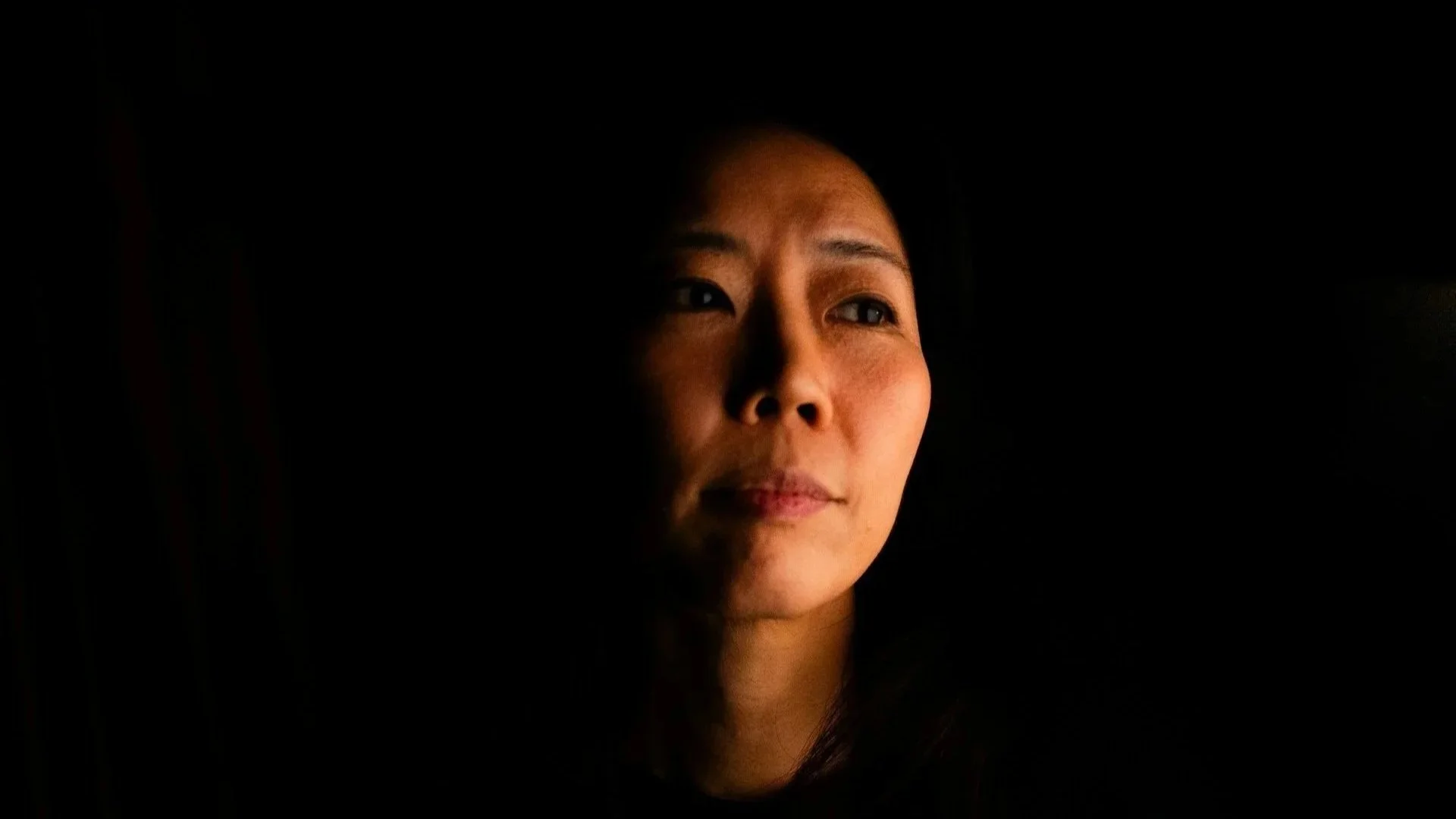
As first-generation founders, it’s easy to bypass our accomplishments. This leaves us in a perpetual chase when what we are looking for is right in front of us.
T H E A F T E R
Who She Is Becoming
Change like this doesn’t usually arrive in a single dramatic moment, like it does in the movies. It shows up quietly, in a series of micro-decisions that used to be hard and now aren’t.
She got featured in a major publication. And instead of minimizing it, she felt genuinely proud of how far she’s come since her childhood days of wanting to be in the limelight.
She planned her recovery days before she finished a challenging project so she didn’t scramble to plan for rest after she’d already hit a wall. She knows how to listen to her body now, and see the signs sooner.
She started to charge what her expertise was actually worth. A rate that accounts for all the invisible labor. She noticed that she showed up to those projects with more ease, not less. Generosity doesn’t come from depletion.
She’s no longer asking whether both passions belong in her life. She’s asking how she wants to grow them together. She’s thinking ahead about succession for her nonprofit, about building a personal financial foundation, about the life she’s designing rather than surviving. The questions are bigger now. So is her capacity to hold them.
And she’s still in coaching—still building, still learning, still navigating the tension between ambition and ease. But she’s doing it with more of herself intact. She’s continuing to come home to herself.
T H E D I F F E R E N C E
What Authenticity Coaching Offers That Therapy and Mentorship Don’t
I often get asked how my coaching works—what it offers that therapy, mentorship, or a good book can't. My honest answer is that it will depend on the client. But in this client's case, here is what I believe made the difference for her.
Learning what our lineage never taught us
Many first-generation Asian Americans grow up in households where feelings aren't named, let alone discussed. Our body's signals often go unacknowledged for so long they stop registering as information. Overriding ourselves just becomes the norm. Part of my coaching with this client was to build up a skill her upbringing never made room for: learning to read her own body’s signals in real time. What started as a silly-feeling practice became a foundational way of sustaining her success that didn’t lead to burnout.
Custom tools for knowing when to say yes
She was fielding new opportunities while still running a non-profit organization, which meant every new request became its own negotiation with herself. Her choices were usually driven by excitement, guilt, or the fear of missing out on something important, which left her open to second-guessing her decisions later on. Instead, we built a custom decision rubric she could run any new project through: Is this creating impact? Do I enjoy doing it? Does it belong in the nonprofit, the LLC, or neither? The rubric saved her time by prioritizing her choices in a way that aligns with her values and who she wants to become. It also gave her grounds to say no without feeling fickle.
Having a safe space without the "good person" trap
When your work is rooted in social impact, there's a particular kind of pressure that doesn't get talked about much: the weight of always needing to get it right. That’s the sign of a “good person,” right? For founders in mission-driven work, the fear of being called out, getting it wrong, or appearing inconsistent can quietly close off the very exploration that is necessary for clarity. In our sessions, she had room to ask the questions she couldn't ask publicly—to sit with contradictions, test out ideas, and follow the thread of her own thinking. Authentic clarity only comes from having a space where the wrong answer is allowed to exist long enough to learn something from it.

“Reflection isn’t optional anymore. It’s how I direct my own life.”
A Note to The Reader
You don't have to be a nonprofit founder or a former tech employee to find yourself in this story. You just have to know what it's like to work hard for something that matters and still not feel like you've earned the right to enjoy it.
Maybe you left something stable to build something real. Maybe you're still in it, holding the tension between the life you have and the one you're reaching toward. Maybe the version of yourself who moves freely and confidently through the world is someone you can picture clearly, but doesn’t seem to show up in your day-to-day life.
That gap isn't a character flaw. It's a space and an opportunity to choose who you want to become.

The patterns keeping you stuck are best unlearned with a gentle partner. I help you navigate the ups and downs without losing yourself along the way.
And once you find your footing, the version of you that leads with clarity and rests without guilt will come with greater ease.
If you're ready to build a meaningful life without constant burnout, learn more about how my 1-on-1 coaching can support you.