Taking a Month Off From Work: What I Wish I'd Known
For high-achievers planning for or coming back from vacation.
If you've ever taken time off and found yourself more restless than rested, this one is for you. For most high achievers, the first few days off feel surprisingly uncomfortable. Decompressing takes longer than we expect, and the space on the other side of that discomfort is where something more important starts to happen.
When I took my first full month off this year, the first thing I felt wasn't relief. It was unease.
The spaciousness I’d been craving for years finally showed up, but I didn't know what to do with it. All I saw was open time, stretching out in front of me like a room with no furniture. It felt more like a void than an invitation. And my instinct, immediately, was to fill it. I had gotten so good at being busy that I didn't know what I actually wanted when I stopped trying to be efficient.
Hello, I’m Betty Chan. I'm a recovering hustler. I coach people on authenticity and gentle living, and I believe that taking rest is leaning into your rebel side in a world that pushes false urgency. Despite this being my work, I still surprised myself when week one looked nothing like what I imagined.
So let me take you along for the ride of my first month off in four years of running my business, because if you're thinking about taking real time off and you're not sure you can do it, I want you to know what it can realistically look like.

Most of us romanticize our first week off. Sometimes, it looks like this – and that’s perfectly okay.
First, Let Me Tell You About the Highway
Imagine everyday life is like driving at 80 miles per hour on a highway. You're moving fast, getting things done, and your body has adapted to the speed. It feels normal. It feels “fine.”
Now imagine you want to take a rest stop. You don't slam on the brakes. You have to signal, ease toward the exit, let the ramp do its work, and gradually decelerate until you reach a full stop. This takes intention and time.
Taking time off works exactly the same way. There’s an on-ramp and an off-ramp—both matter. I'll come back to this later in this article.
Why Your First Week Off Often Doesn’t Feel Restful
The first week of my month off was the complete opposite of rest.
I think this is what learned urgency does to us. We spend years building the reflex to keep going, to stay productive, to justify how we spend our time. And it works…until we try to rest and realize we've forgotten how. We've been so well-trained by the pace of professional life that stillness starts to feel a problem, like we’re falling behind or that something must be wrong if nothing is demanding our attention.
When work is the center of your days, the rest of your life doesn’t disappear. It just quietly piles up in the background. The moment your work steps back, all of that rushes in to fill the space: forgotten chores, friends you haven’t responded to, and the part of you that wants everything “taken care of” before you can start to rest. This is all shaping the first few days of your personal time off.
S I D E N O T E :
Common things that tend to fill up your first week (that we rarely see coming):
Overdue laundry, household admin, a backlog of unanswered texts, bills or finances you've been half-ignoring, the friend you've been meaning to call, the appointment you keep rescheduling, or the errand that's been sitting on a sticky note for three weeks. None of it is urgent. All of it feels that way.
I spent my first week traveling to a new city for a multi-day retreat. Dreamy, right? The past version of me thought a change of scenery would accelerate my decompression. Oof, was she wrong!
What I didn't account for was that newness, even exciting newness, drains my energy. My brain can’t rest when it’s trying to figure out where to go in a new environment, and how to introduce myself to 30+ people I met for the first time. It was working overtime trying to orient itself, while wondering why I couldn’t really relax.
My rest didn’t kick in until week two, when I was back home. I knew I was finally transitioning when I woke up without immediately scanning my mental to-do list, or bracing for the things I forgot to do. The tension that had lived in my neck and shoulders for months slowly started to loosen. And in that quiet phase, something important started to surface—a clearer, more honest sense of what I want my life to feel like. It was reconnecting to a clarity that got lost underneath all the noise of goals, plans, and checklists.
How Setting an Intention Helps You Rest
Before my month off began, I set one intention for myself: presence.
For me, presence means my brain is not reviewing the past or planning for the future. It's not trying to connect dots across projects, clients, and content. It's not firing across seven topics at once, which, as someone who's neurodivergent, is my baseline. This ability is useful when I'm building something or coaching someone, but it’s not helpful when I'm trying to rest. And it was one of the main reasons I'd been feeling a growing exhaustion for more than a year.
Choosing an intention is more practical than it sounds and works way better than a “five-step plan for rest.” It gave me a way to filter my choices. When something came up, I didn't have to deliberate or make a pro/con list. I just ask myself, “Does this require my brain to leave the present moment?” If the answer was yes, I let it go. If the answer was no, I would keep doing it. This one word made it easier to get out of my indecisive moments.
That's the power of naming an intention upfront. It doesn't restrict you. It frees you, because you're no longer making every small decision from scratch or measuring yourself against a plan.
S I D E N O T E :
Three low-stakes ways to practice presence (no meditation required):
Move through your day without watching the clock: eat when you're hungry, nap when you're tired, and let yourself get lost in your day.
Say yes to the first thing that sounds good, not the best thing. The impulse to optimize even small pleasures is worth noticing.
Let yourself be bored without reaching for your phone. Even ten minutes can be clarifying because boredom is one way you can start to hear yourself again.
When Productivity Backfires and What to Try Instead
Most high achievers I meet use the same approach for work and for rest. That’s where things start to backfire.
At work, optimizing and being efficient is smart. It’s a good skill to have; I'm not arguing with that. But when you apply that lens to your rest, you end up working hard at taking time off. Listen to how that sounds. “You work hard at not working.” Make it make sense!
When you filter your desires through the lens of productivity, you end up asking the wrong questions. You think about, "Is this the best use of my time?" instead of "What would feel restorative for me?"
I wasn’t always great at this ability to realign my thoughts with what I truly wanted. One way I build the muscle for this is by actively making space for what I call "marination"—the open, unstructured, slightly-bored kind of time—where your desires get to naturally surface. Kind of like how good sauce brings out the flavors that are already there. This is the space where no one is asking anything of you. It’s where you remember who you are, and where your creativity lives.
After years of coaching people through this, I can tell you that the clarity can’t happen if you never slow down. If you never feel the gap between the life you're performing and the one you actually want. Only when you finally turn down the noise can you start to hear your own thoughts of what you want, separate from what you've been told to want.
S I D E N O T E :
What optimizing rest can looks like (so you can catch it in real time):
Researching the "best" coffee shop before letting yourself walk out the door. Feeling guilty for reading something fun when you could be reading something useful. Choosing the activity that sounds most productive instead of the one that sounds most enjoyable. Turning a slow morning into a planning session without realizing it.
If any of these sound familiar, you might be over-optimizing your vacation.
If any of this sounds familiar, this the kind of pattern I help clients untangle in my 1:1 coaching.
Plan With Your Heart, Not Your Head
When I was planning my time off, I told myself I would get back to my furniture flipping right after I came home from traveling. I made this plan with my head.
What actually happened: the furniture didn't get touched for another two weeks. I spent most of my second and third week cooking every day and logging hours on the Xbox. At first, it felt like I was deviating from my plan. Then I realized: a wok and a game controller are just different versions of an orbital sander. My real goal was always to get away from my computer screen and to do things involving my hands. Turns out my hands didn't care what they were holding.
Here’s what I learned: you’re more likely to stick with the plan when you lead with your heart rather than your head. That's gentle living in practice—a commitment to return to your desires after years of overriding them.
By the end of the month, I got everything I was looking for, even if it didn’t happen in the order I expected. The list of promises I kept was longer than I expected: my furniture got finished, I took time to workout despite travel (genuinely surprised myself on that one), I saw people I'd been meaning to see, and a massage I'd been postponing for months finally booked.
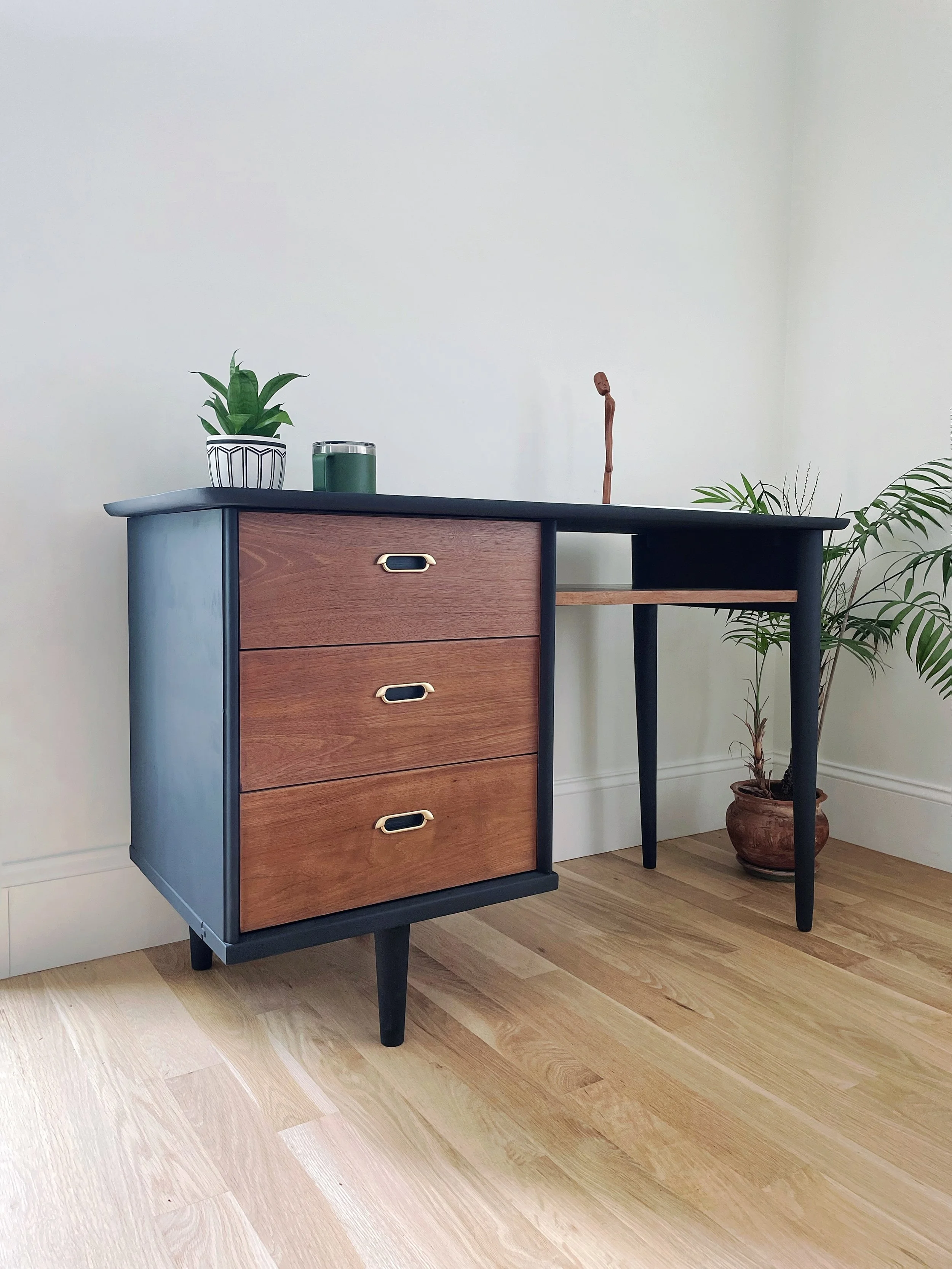
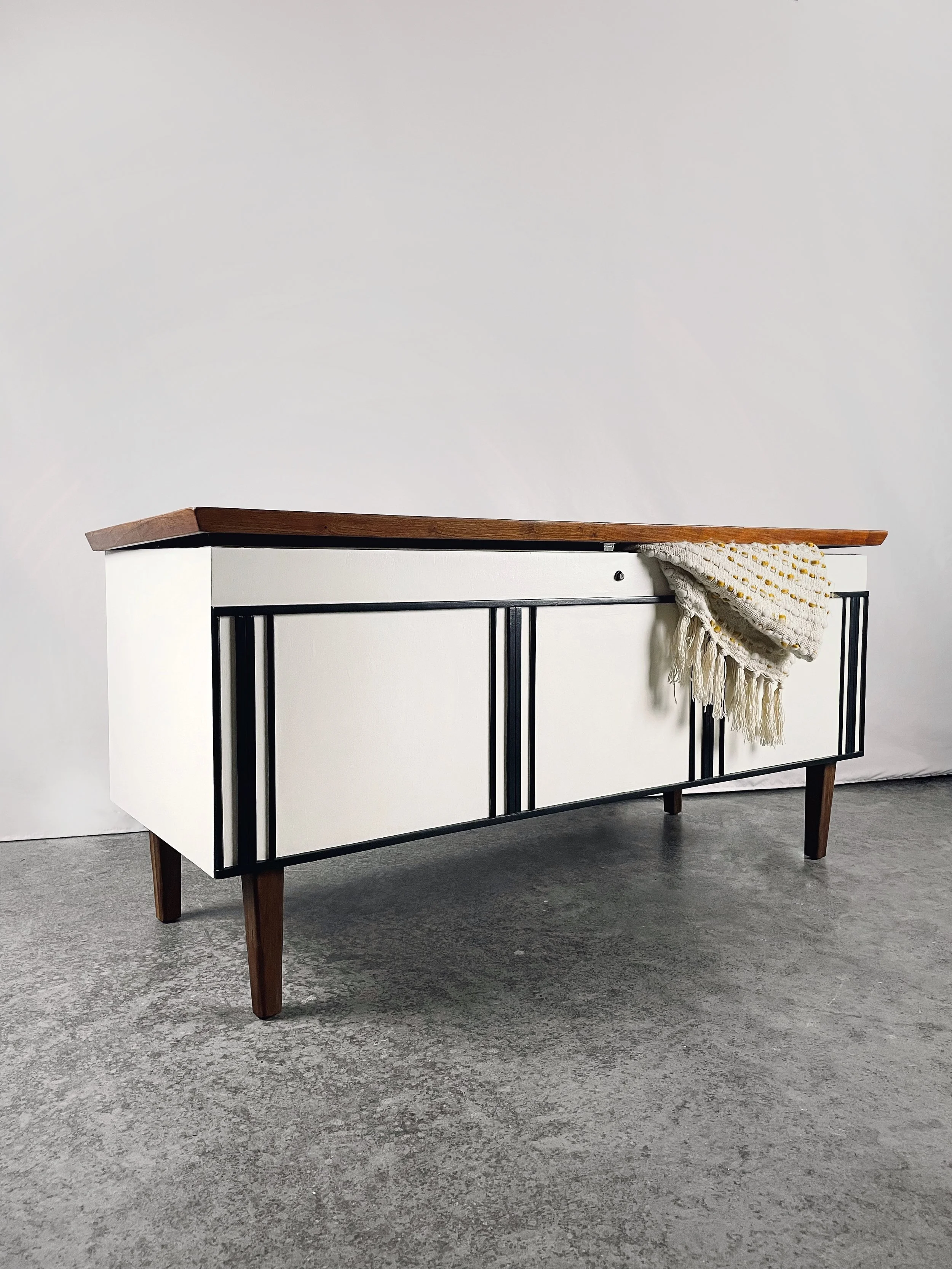
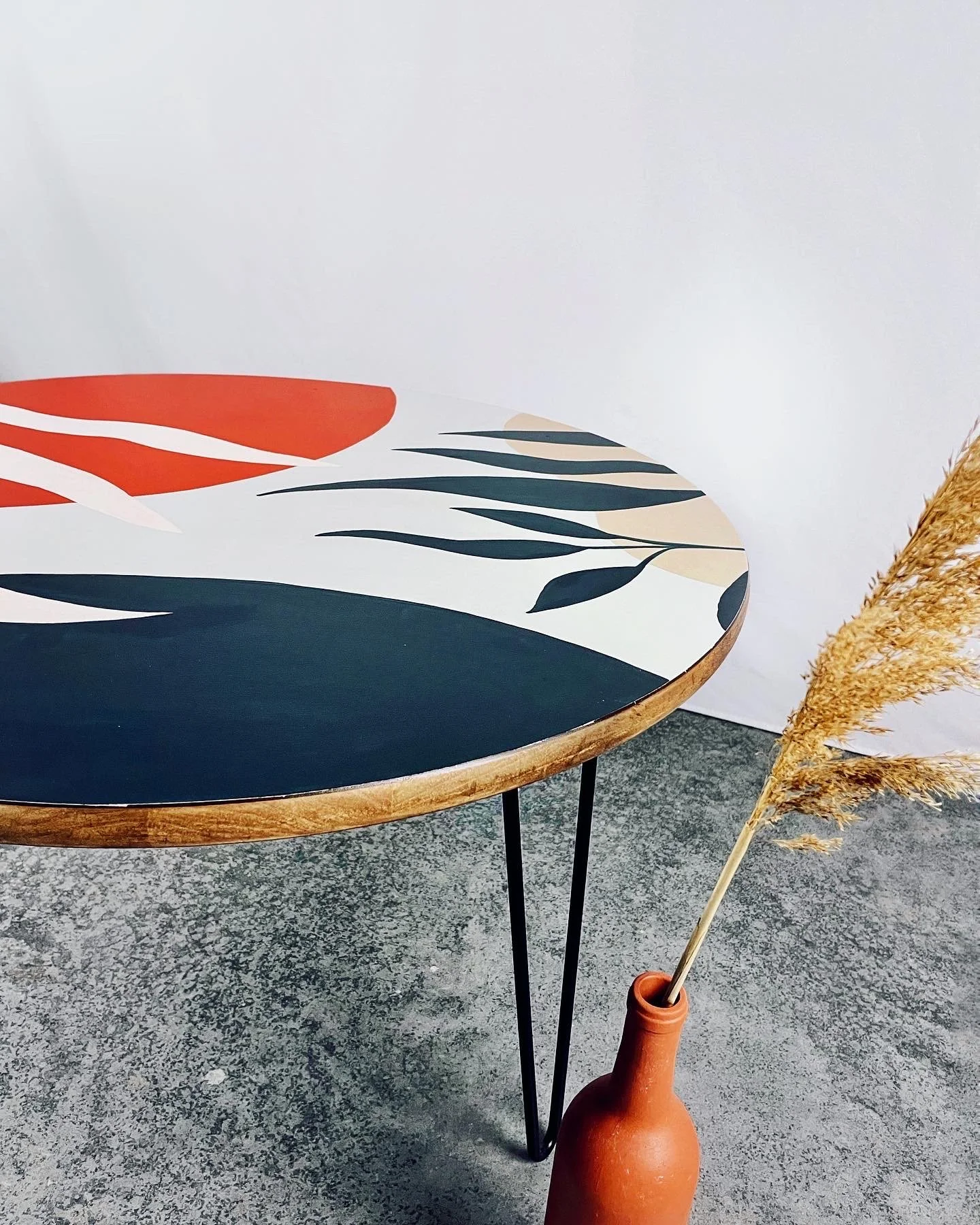

(Above) A sample of refinished furniture my partner and I worked on. I had planned to do more during my month off.
When to Cheat on Your Time Off
One way I defined rest was to not do any work. So you can imagine how I shamed myself the moment I fell back into work mode.
But I've since adjusted that definition. Resting isn't about policing yourself. It's about staying true to your intention.
For months, I had stopped writing for my blog or posting on Instagram. It had started to feel like chores. So it was interesting to see myself suddenly want to write and share during my time off. The difference: I wasn't trying to reach a content goal. I posted on Instagram because I was more present to the joyful moments returning to my life, and I simply wanted to share what made me smile. Writing on my blog felt the same way—less like content, more like conversation.
When something you love starts feeling like a chore, it's usually not the activity that's the problem. It's the pressure wrapped around it.
The point was never to perform rest perfectly. The point was to take the pressure off.
How to Build a Gentle Re-Entry After Time Off
Remember the highway analogy? There's a second half to it.

Be mindful of your speed before and after your time off.
Getting back on the highway after a rest stop works the same as taking the exit. You don't pull straight from the parking lot onto a 80 mph lane. You build up speed, and you merge carefully.
Coming back online after a full month off, I gave myself four business days before my first client call. No meetings, no deadlines, no deliverables. This way, I re-enter at a pace that I chose rather than a pace that my worry (of falling behind) chose for me.
I remember the days of only having ten PTO days for an entire year, so I get that not everyone can afford this much time off. But even taking a day or two to intentionally transition makes a difference in what you bring back from your vacation.
Here's what I've come to understand about why it matters so much: most high achievers are “the glue” at home and at work. We learned early that our presence, our preparation, and our responsiveness could hold things together—and we got very good at it. So damn good that the gaps never surface, until we step away. Taking time off sheds light on how much we quietly carry. Coming back slowly gives you the chance to deliberately decide what you're picking up again, and where you need to bring in support to create healthy redundancy.
S I D E N O T E :
A few ways to build a gentler ramp after your time off:
Give yourself at least one full day before your first meeting — just to read through what you missed without the pressure to have to respond to any of it yet.
Let your first week back be lighter than usual. Fewer calls, shorter days, more margin. Protect it like you protected your time off.
Do a quick reset before you open anything: what intention do you want to carry from your time off into this next season? Even one word or sentence is enough.
Making the Most of Time Off: Answers to Your Top Questions
I’m sure by now you have a ton of questions. Here’s what most people have asked me about my month off:
How do I decide how much time to take off?
Start by asking how depleted you actually are. A long weekend refreshes. A full week begins to restore some outlook. A month gives you enough time to decompress and actually hear yourself again.
One thing worth knowing going in: your body doesn't care about your calendar. It runs on its own timeline and will take the time it needs before it can fully exhale. Whatever you decide, give yourself a little more than you think you need.
How much ramp time should I plan for?
A rough guideline I use: budget about 25% of your time off as ramp time, and split that across the beginning and end.
For example, a month off means roughly 4 ramp days at the beginning, and 3-4 ramp days before coming back online. Most of us don’t get another chance to take time off till months or even a year later. The ramp days protect your energy so it doesn’t get blown in your first week. The ramp is proportional—the length of your time off changes, the principles don't.
What if something breaks while I'm gone?
I hear this mostly from managers, directors, and entrepreneurs. Other versions of this question sound like, “Will I lose my momentum and have to start over?" or “Will my business stop if I'm not available?”
Here’s the honest truth: something might break, but that’s not necessarily a bad thing. It could end up being the wake-up call you need to build a more sustainable, time-rich life.
This happened to me during my first week back. I learned that a client was deeply upset with me. (Trust me, I had the usual thoughts of "What did I miss? What could I have done differently?".) I’m not shy about conflict, so I leaned on what I know as a coach who helps people create authentic connection. My client and I had a handful of conversations where we made an effort to listen and were shared honestly about our disappointments. Ultimately, we realized that his current expectations, which evolved over time, no longer matched what he originally signed up for (we’re transitioning from individual to group coaching). Taking time off didn't create this problem, but it gave us the chance to see the gap clearly. I also had more energy to actually solve it, rather than letting the misunderstanding quietly fester. Now we have an approach that works better for both of us.
Something to ask yourself if you’re worried about stepping away: would you rather discover a gap when you’re rested, or stumble onto it on a random Tuesday when you’re already depleted?
How do I bring vacation vibes into my everyday life?
One practice that helped me: in the last few days of my time off, I wrote down what I actually accomplished, not what I planned. What were all the things I said I wanted but put on the back burner for months, maybe years, and finally got to reconnect with?
Having this list before I opened my inbox does two things: to feel damn good about your choice to rest, and the clarity on what you could integrate into your everyday calendar rather than segregate into vacation mode. It's harder to create change when you don’t know what you’re aiming for.
These are also questions I often hear on my discovery calls — if you're ready to enjoy your life outside of vacation, that's a good place to start.
And Finally…Was It Worth It?
As you can see, my month off didn't go the way I planned. Week one wasn't restful. The furniture got done later than I expected. March turned out to be a complicated month to take off (two words: tax season). I'd probably choose January or February next time.
But six weeks after coming back to work, I’m still grateful I made it happen, and I plan to do it again next year. It reminded me that I don’t have to wait until I’m wrinkly and retired to enjoy my life. And that I’m a better human, business owner, and leader when I’m rested and intentional about how I show up.
Authenticity is incredibly difficult to maintain when you are constantly bombarded by external opinions, trends, and societal pressure. Taking rest allows you to turn down the noise, so you can actually hear your own voice and values.
If you're still noticing some resistance, wondering whether your job will hold, whether you'll lose momentum, whether it's worth the effort — I hope this story makes it feel more possible. And if you could use a supportive space to navigate a sabbatical or extended time off due to layoff or otherwise, I’m here.
Your Authenticity Coach,
Betty

Let’s set you up for some good, deep rest.
If you took time off and still came back feeling off—that's worth paying attention to. It might mean you need more alignment than rest. My focus session can help you spot where that tension lives.
And if you're still in the process of planning, check out my newsletter where I share more tips on how to build a time-rich, intentional life.